Many believe that strengthening the leg muscles will make knee discomfort disappear on its own. New research on women with knee osteoarthritis shows this is only half the story.
What the Scientists Found
Researchers studied women with osteoarthritis in both knees, looking at what has a stronger effect on their mobility and well-being: muscle strength or the ability to maintain balance. Even after the authors factored out age, weight, and pain levels, both elements — muscle strength and postural stability — showed an independent, standalone contribution to how a woman moves objectively and how she rates her own everyday capabilities.
This matters because for a long time, rehab and fitness programs bet almost entirely on strength: build up the quads, strengthen the hip, and the knee will “sort itself out.” It turns out that strength alone can’t do all that sorting.

Why Balance Isn’t a Bonus — It’s a Separate Task
Postural stability isn’t about a nice stretch or some trendy Instagram buzzword. It’s the body’s ability to adjust its position when the support becomes unstable — when you trip on uneven ground, turn sharply, or shift your weight from one leg to the other. With knee problems, this is often the function that suffers first — and the one people notice least.
If your training plan consists only of strength work — leg presses, squats, leg extensions on a machine — but includes no stability exercises, you’re only training part of the system. The other part, responsible for coordination and movement control, gets left out.
What to Add to Your Workouts
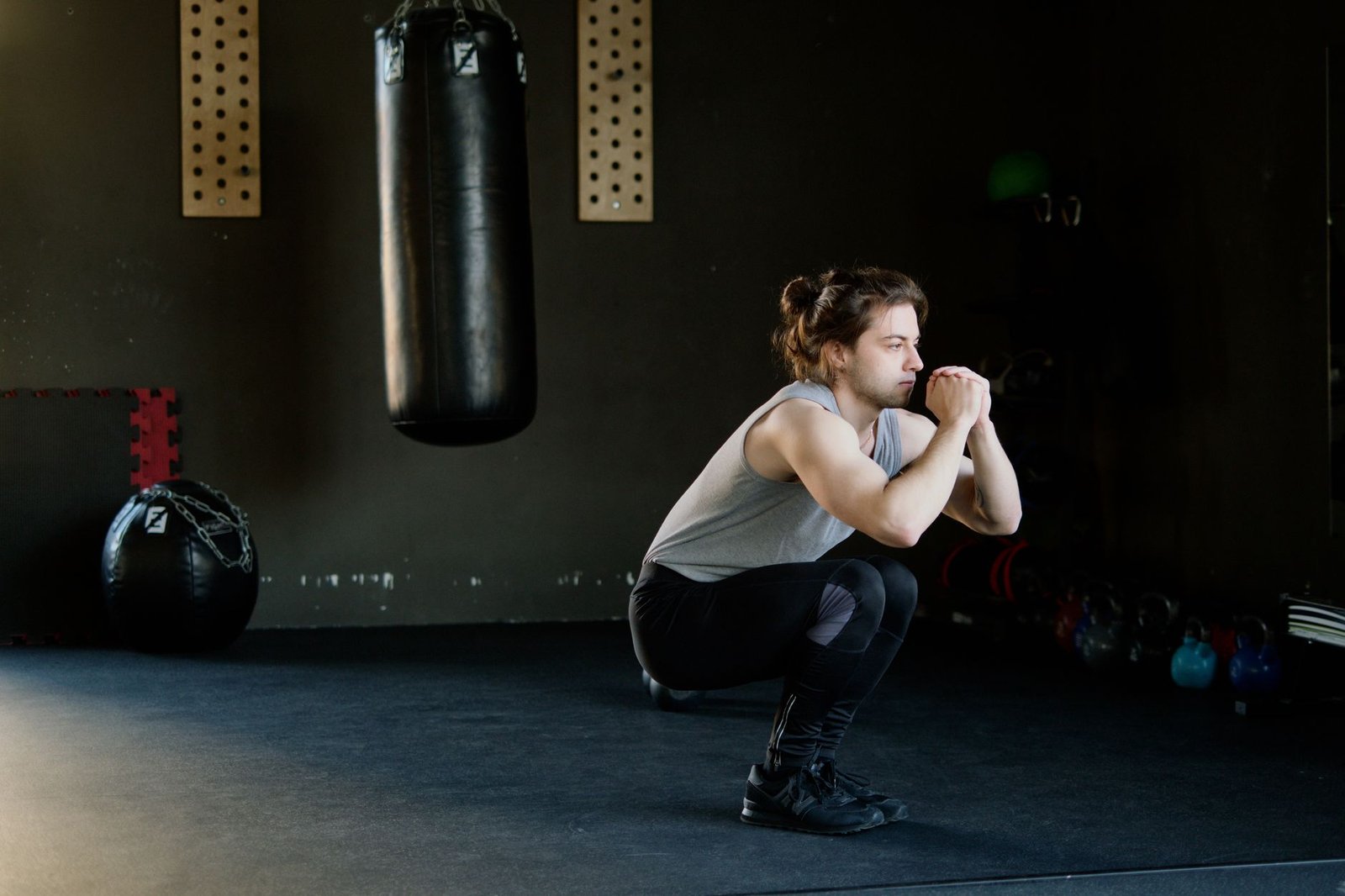
Training on unstable surfaces, single-leg exercises with controlled knee alignment, slow, controlled squats focused on technique rather than weight — all of this trains the postural component specifically. This isn’t about balancing on a stability ball for a flashy Instagram story, but about consistent, regular practice alongside strength training.
It’s important to understand: this isn’t a replacement for strength training, but a complement to it. Strong muscles without movement control are only half the solution. Good balance without strength is also only half. Knee function relies on both components working together.
What This Means for Women in the Gym
If you train despite knee discomfort, and you’ve added strength work for six months with only modest improvement, the issue might not be a lack of strength — it might be that balance and coordination simply aren’t part of your program at all. That’s not a reason to panic, but a good reason to review your training structure with a coach or movement specialist.
The subjective feeling of “this is hard for me” and objective movement tests are two different things, and this research confirms it: muscle strength affects one thing, stability affects another, and both metrics matter for the final result.
Key takeaways
- Leg muscle strength and balance ability affect knee function independently of each other
- Strength training alone isn’t enough if balance and coordination training are ignored
- Postural stability matters even after accounting for age, weight, and pain level
- Training programs should include stability exercises alongside strength work
- Subjective sensations and objective movement measures don’t always match — both deserve separate training focus
Source: PubMed / Healthcare (Basel)